
The Diagnosis Room - Edition 003
This week: a CEO who promoted the wrong person three months ago. The problems are undeniable. Full clinical breakdown - diagnosis, prescription, and the conversation he needs to have before the situation becomes a crisis.
Start Free 14-Day Trial → No credit card requiredThe Operating Leader · Week 2 of 4
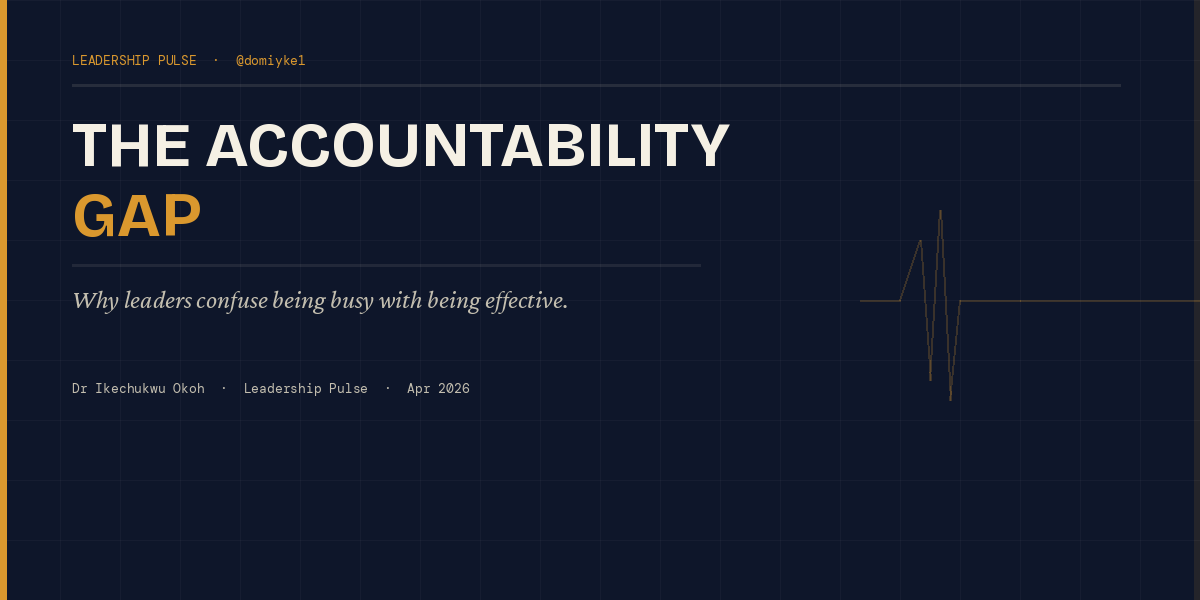
The Accountability
Gap
Why leaders confuse being busy with being effective.
Welcome to the Leadership Pulse
Practical insights at the crossroads of leadership, strategy, and growth. Every week, Dr Ikechukwu Okoh presents MBA-level frameworks, real-world stories, and timeless lessons to help you lead clearly, inspire purposefully, and execute effectively.
Last week we diagnosed the delegation deficit - the leader doing work that belongs to someone else. This week I want to diagnose what that leader is telling themselves while they are doing it.
They are telling themselves they are busy.
In most organisations, busy has become a proxy for effective. The leader who is in the most meetings, responds fastest, and stays latest is rewarded - not because anyone has verified these behaviours produce results, but because they look like commitment.
This is the accountability gap - the distance between how much a leader is doing and how much they are producing.
Clinical Parallel · Diagnostic Hyperactivity
A junior doctor who orders every test for every patient looks thorough. But while they were ordering the twelfth blood panel, nobody was asking the question that would have produced the diagnosis in ten minutes. The most dangerous clinical error is not negligence. It is the busyness that crowds out clarity.
The most dangerous leader is not the one who does nothing. It is the one who does everything except the right things.
What the Accountability Gap Looks Like
Activity reported instead of outcomes.
Meetings attended. Emails sent. Conversations had. At no point does anyone ask what changed as a result. The activity becomes the deliverable.
Urgent work displaces important work.
Urgency is measurable. Importance is not. So urgency wins, every time, unless someone is actively managing the difference.
Accountability to process rather than outcome.
"I escalated it." "I followed the process." These describe what was done, not what was produced. A leader accountable to process can be doing everything right and delivering nothing of value.
Measurement of inputs rather than outputs.
Hours worked. Response times. Meetings attended. These are inputs. Problems solved. People developed. Decisions made. These are outputs. Most organisations measure inputs because they are easy to count.
The PACE Framework
Four questions that cut through the activity and identify where work is actually producing value.
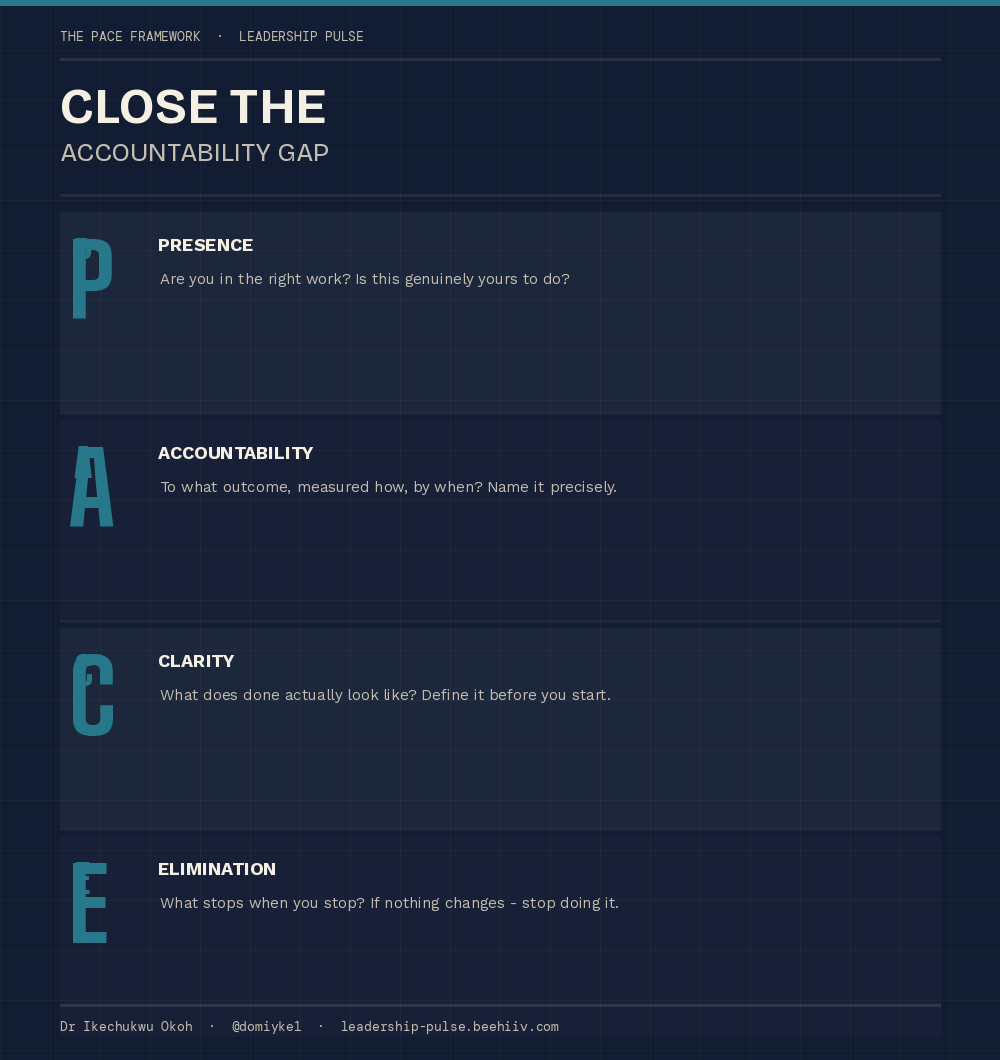
Presence: are you in the right work?
Before optimising how you do your work, establish whether you are doing the right work at all. Most leaders find that 30 to 50 percent of their week is spent in work that either should not exist or should be done by someone else.
Accountability: to what, exactly?
Complete this sentence: I am accountable for [specific outcome], measured by [specific metric], by [specific date]. If you cannot complete it, your accountability is to a process, not an outcome. That is an accountability gap.
Clarity: what does done actually look like?
Done is not "I sent the email." Done is "the person received it, understood it, and changed their behaviour." Blurry definitions of done are the most reliable predictor of the accountability gap. When success is vaguely defined, everyone can claim it.
Elimination: what stops when you stop doing it?
The most powerful question in the framework. If nothing measurable would change, or someone else would pick it up without being asked, or the meeting would still happen with a different person in the chair - that activity is a candidate for elimination. Not delegation. Elimination.
This Week's Leadership Practice
The 40-Minute Accountability Audit
Write down the five things you spent the most time on last week. For each one answer:
What specifically changed in the world as a result of this activity?
If I had not done this, what would be different right now?
Is this the highest-leverage use of my time relative to what I am trying to produce?
Two or three activities will have clear answers. The rest are your accountability gaps. Name them. That is where the work starts.
What I'm Reading This Week
Measure What Matters - John Doerr
The OKR framework is the most practical system I know for closing the accountability gap at an organisational level. Objectives and Key Results forces leaders to define not just what they are working on but what success looks like and how it will be measured. If the PACE framework resonates, this is the operational companion.
Get it on Amazon →From the Feed This Week
Every day I share a short leadership idea on LinkedIn. Here is the one that sparked the most conversation this week.
Nobody promoted you to lead.
Read the full post and join the discussion →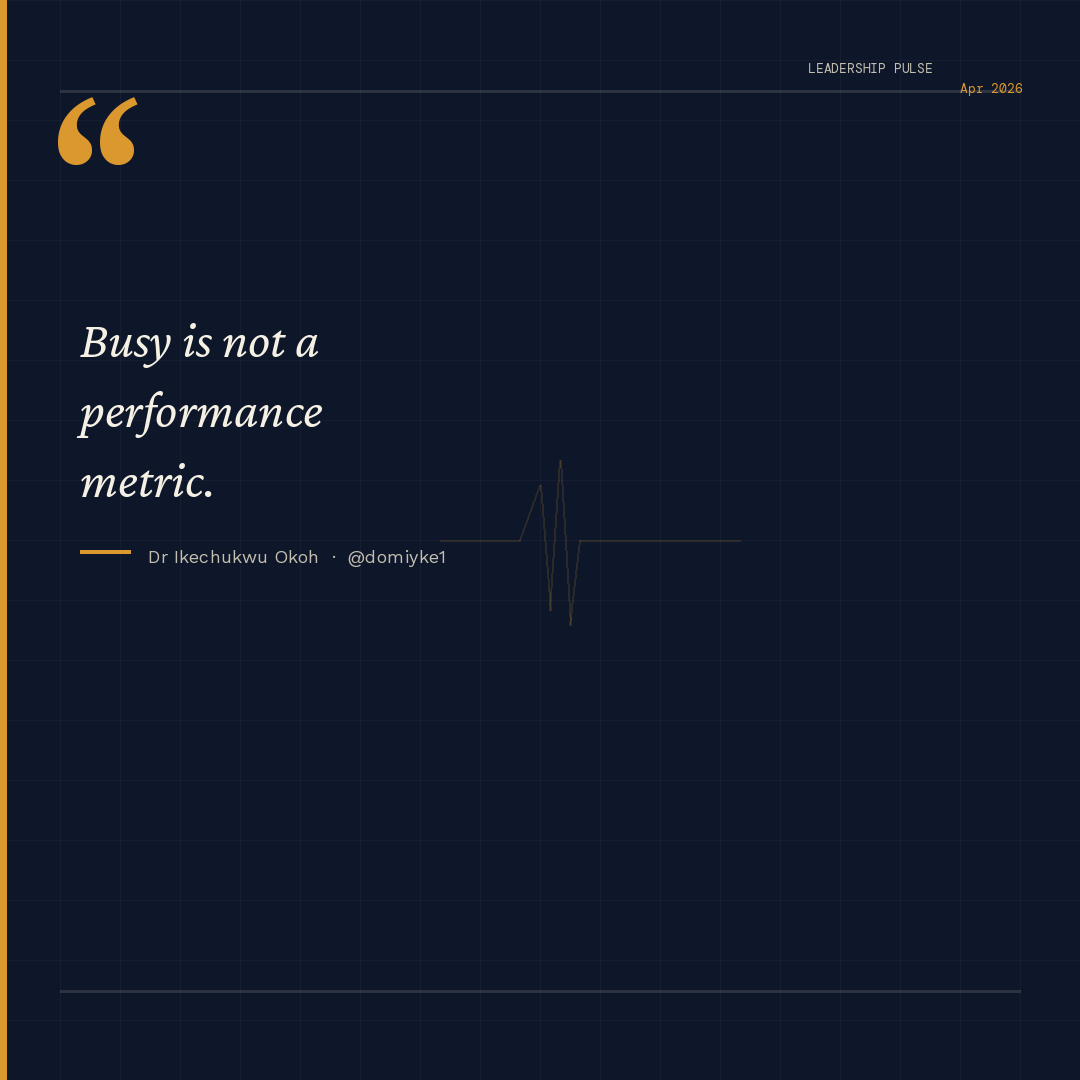
Final Thought
In medicine, we have a phrase for this condition.
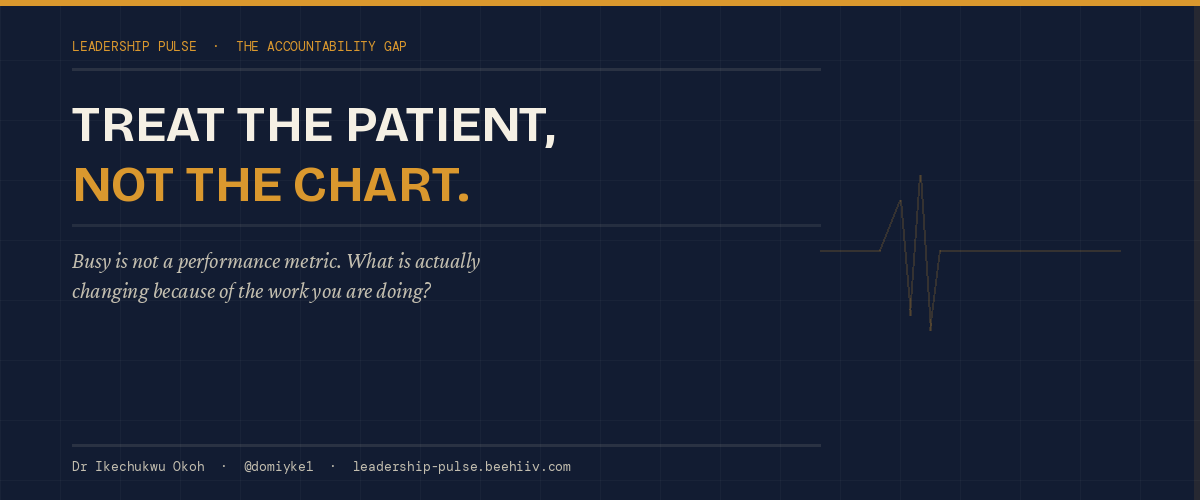
Treating the chart, not the patient.
A doctor who is updating records, ordering investigations, completing paperwork, and attending handovers - but not asking whether the patient is actually getting better - is treating the chart. The system is satisfied. The patient is not.
Leadership has its own version. The leader attending meetings, sending updates, managing processes, and being visibly present - but not asking whether any of it is moving the organisation toward the outcomes it exists to produce - is treating the chart.
Lead honestly. Lead clearly. Lead with accountability.
Now Available
The Authority Playbook - £27
The complete system for building genuine authority and consistent income from your expertise. Instant access.
Get The Authority Playbook →If this named something you have been aware of but not yet addressed - forward it to one leader in your network who needs to hear it.
Book a Discovery Call →Dr Ikechukwu Okoh
Healthcare leader, executive coach, angel investor, and Group Head at Boulevard Group.
All previous editions at leadership-pulse.beehiiv.com
AI Alone Can’t Run Revenue
Finance doesn’t run on “mostly right.” It runs on math.
In The Architecture Behind AI-Native Revenue Automation, Tabs’s CTO breaks down why LLMs alone aren’t enough—and what it actually takes to build audit-ready, AI-driven contract-to-cash systems for modern B2B teams.

The Leadership Pulse - Founding Member Access
Real leadership cases. Clinically diagnosed. Every week.
Become a Founding MemberUnlock Exclusive Access to:
- The Diagnosis Room - a real case, fully diagnosed, every Monday
- The Clinical File - one deep case study per month
- Executive Edge early access - frameworks before they go public
- Quarterly Leadership Audit - know exactly where you stand
- Founding member pricing - locked for life
